What Is ESD Plastic? Properties, Applications & China ESD Plastic Supplier

What Is ESD Plastic? Properties, Applications & China ESD Plastic Supplier

Have you ever wondered how sensitive electronic components stay safe from static electricity? ESD plastic plays a vital role in this protection. It’s an engineered material designed to prevent static buildup and discharge, ensuring reliability in various applications. Understanding its properties and uses can greatly impact industries like electronics and packaging. Let’s explore what sets ESD plastic apart and why it’s essential for your operations.

What Is ESD Plastic?

Black and white ESD POM sheet samples with anti-static meter
Assorted thickness ESD POM sheets tested with anti-static meter

ESD plastic is specifically designed to manage static electricity, protecting sensitive components from damage.

You’ll find different types, like anti-static and static dissipative plastics, each serving unique purposes.

Understanding how these materials work can help you select the right one for your needs.

1. Definition and Key Characteristics of ESD Plastics

A type of engineered plastic, ESD plastic is specifically designed to prevent the buildup and discharge of static electricity. It plays a pivotal role in protecting sensitive electronic components from damage.

ESD-safe plastic combines properties of anti-static and static dissipative materials, ensuring safe handling in various environments. You’ll find that conductive plastics, which allow static charges to flow easily, are perfect for applications requiring rapid discharge.

Meanwhile, anti-static plastics focus on preventing static accumulation altogether. By integrating these materials into your manufacturing processes, you foster safety and reliability, creating a sense of belonging in industries that prioritize quality and performance.

Embracing ESD plastic means investing in both product longevity and user safety, which truly matters.

2. Difference Between Anti-Static, Static Dissipative(ESD Plastic), Conductive Plastic, and Insulative Plastics

Understanding the differences between anti-static, static dissipative(ESD Plastic), conductive plastic, and insulative plastics is vital for selecting the right material for your applications. Each type serves unique roles in static control:

TypeCharacteristics
Anti-Static PlasticPrevents static generation (10⁹–10¹² Ω)
Static Dissipative Plastic (ESD Plastic)Discharges static at controlled rate (10⁶–10⁹ Ω)
Conductive ESD PlasticConducts electricity quickly (10³–10⁶ Ω)
Insulative PlasticDoes not conduct (resistivity >10¹² Ω)

Choosing the right plastic depends on your specific needs—whether it’s for electronics, packaging, or automotive applications. Collaborating with an ESD plastic supplier can help guarantee you pick the best material for safety and performance. Embracing these differences not only enhances product reliability but also fosters a safer environment in your operations.

3. How ESD Plastics Work

How do ESD plastics effectively manage static electricity? They work by either dissipating or conducting static charges, depending on their type.

Conductive plastics quickly discharge static, making them perfect for high-risk environments like electronics manufacturing.

Dissipative plastics control static more gradually, offering a balanced approach for various applications.

Meanwhile, anti-static plastics prevent charge buildup altogether, which is essential in low-humidity settings.

By integrating these materials into your processes, you’re not just protecting sensitive components; you’re enhancing overall safety and reliability.

Choosing the right ESD plastic for your needs fosters a sense of community within your industry, ensuring everyone benefits from reduced risks and improved product quality.

Embracing ESD plastics means you’re prioritizing both safety and innovation.

Why Use ESD Plastic Materials?

Small ESD POM components on table in factory testing room
ESD-safe POM parts placed in testing room for performance evaluation

In industrial settings, static electricity poses significant risks that can damage sensitive equipment and compromise safety. By using ESD plastics, you can effectively mitigate these risks, ensuring safe handling and protecting valuable electronic components.

Plus, these materials enhance performance and reliability, making them a smart choice for electronics and packaging applications.

1. Static Electricity Risks in Industrial Environments

Static electricity poses significant risks in industrial environments, especially where sensitive electronic components are involved. You mightn't realize it, but even a small static discharge can lead to costly damage, disrupting production and affecting product quality.

If you work in electronics, automotive, or medical fields, it's vital to understand the dangers static can pose to your components. By using ESD plastic materials, you can mitigate these risks and create a safer workspace.

These materials help control static buildup, ensuring that your equipment remains protected from harmful discharges. Implementing ESD plastics not only safeguards your products but also fosters a culture of safety and reliability within your team.

This allows everyone to feel confident in their work environment.

2. Benefits of Using ESD Plastics in Electronics & Packaging

Why risk costly damage to your sensitive electronic components when ESD plastics can provide a reliable solution? By using ESD plastics, you create a protective barrier against electrostatic discharge, ensuring your devices stay safe during manufacturing and shipping.

These materials not only safeguard your products but also enhance overall durability, leading to fewer defects and lower costs over time. Plus, they align with industry standards, giving you peace of mind that you’re meeting safety requirements.

Moving to ESD plastics fosters a sense of community among manufacturers who prioritize quality and reliability. You’re not just protecting your components; you’re investing in a culture of excellence that benefits everyone in the supply chain.

Embrace ESD plastics, and strengthen your commitment to safety and innovation.

3. Safety and Performance Advantages to use ESD Plastics

When you choose ESD plastic materials, you're prioritizing both safety and performance in your products. These materials protect sensitive electronics from static damage, ensuring reliability in your designs.

By preventing electrostatic discharges, you’re not just safeguarding components but also fostering trust within your team and customers. ESD plastics enhance durability, reducing defects and downtime, which is essential for maintaining quality standards.

Moreover, they comply with industry regulations, boosting your credibility in the market. Using ESD plastics means you’re part of a community dedicated to innovation and safety.

With every product you create, you’re contributing to a safer environment, where performance and protection go hand in hand. Embrace ESD plastics and elevate your brand’s commitment to excellence.

Common Types of ESD Plastic Materials

Various ESD plastic resin granules neatly arranged
Multiple types of ESD plastic granules sorted by material and color

When selecting ESD plastics, you’ll encounter a variety of options like ESD ABS, ESD PVC, and ESD Polycarbonate (PC). Each material offers unique benefits, making them suitable for different applications, especially in precision parts.

Understanding these common types will help you choose the right one for your specific needs.

1. ESD ABS

Have you ever considered how vital ESD ABS is in protecting sensitive electronic components? This specialized plastic combines the durability of ABS with electrostatic discharge protection, making it a favorite in various industries.

You’ll find ESD ABS used in manufacturing processes, packaging, and electronic housings, where static control is imperative. Its ability to dissipate static charges ensures your components remain safe during handling and transport, fostering a sense of reliability in your work.

Plus, ESD ABS is lightweight yet tough, offering excellent impact resistance. By choosing ESD ABS, you’re not just opting for a material; you’re joining a community committed to safeguarding technology and enhancing product performance.

Embrace the benefits of ESD ABS in your projects and feel secure in your choice!

2. ESD PVC

Building on the significance of ESD ABS, ESD PVC is another important type of ESD plastic that plays a vital role in static control applications. It's often chosen for its flexibility and durability, making it ideal for various uses like packaging and protective covers. ESD PVC not only helps prevent static charge buildup but also offers excellent chemical resistance.

PropriedadeESD PVCAplicativos
Resistividade da superfície10^6 - 10^9 ohms/sqPackaging, flooring
FlexibilidadeAltaCustom trays, protective covers
Resistência químicaExcelenteElectronics, automotive
Cost-effectivenessModeradoVarious industries
PesoLeveEasy handling and transport

Incorporating ESD PVC into your projects guarantees safety and reliability.

3. ESD Polycarbonate (PC)

ESD Polycarbonate (PC) is a versatile choice among ESD plastics, known for its excellent impact resistance and optical clarity. You’ll appreciate how this material combines durability with electrical conductivity, making it ideal for protecting sensitive electronic components.

Its lightweight nature is perfect for various applications, from protective housings to display panels, ensuring safety without compromising visibility. Plus, ESD PC can be easily molded into complex shapes, allowing for innovative designs that meet your specific needs.

Whether you’re in electronics or automotive sectors, using ESD PC helps you connect with a community that values quality and reliability. By choosing this material, you’re not just selecting a product; you’re embracing a commitment to excellence and safety.

4. ESD POM and PEI/PEEK for Precision Parts

When precision and reliability are paramount, why not consider ESD POM (Polyoxymethylene) and PEI/PEEK (Polyetherimide/Polyetherketone)? These materials offer exceptional strength and stability, making them ideal for precision parts in various industries. Their ESD properties ensure safe handling of sensitive components, protecting them from static damage.

MaterialKey PropertiesAplicativos
ESD POMHigh strength, low frictionGears, bearings, and connectors
PEI/PEEKHigh thermal resistanceAerospace, medical devices

Choosing ESD POM and PEI/PEEK means you're investing in quality and safety. By utilizing these materials, you align with industry standards, ensuring your products not only perform well but also maintain integrity in static-sensitive environments.

ESD Plastics for Industries and Applications

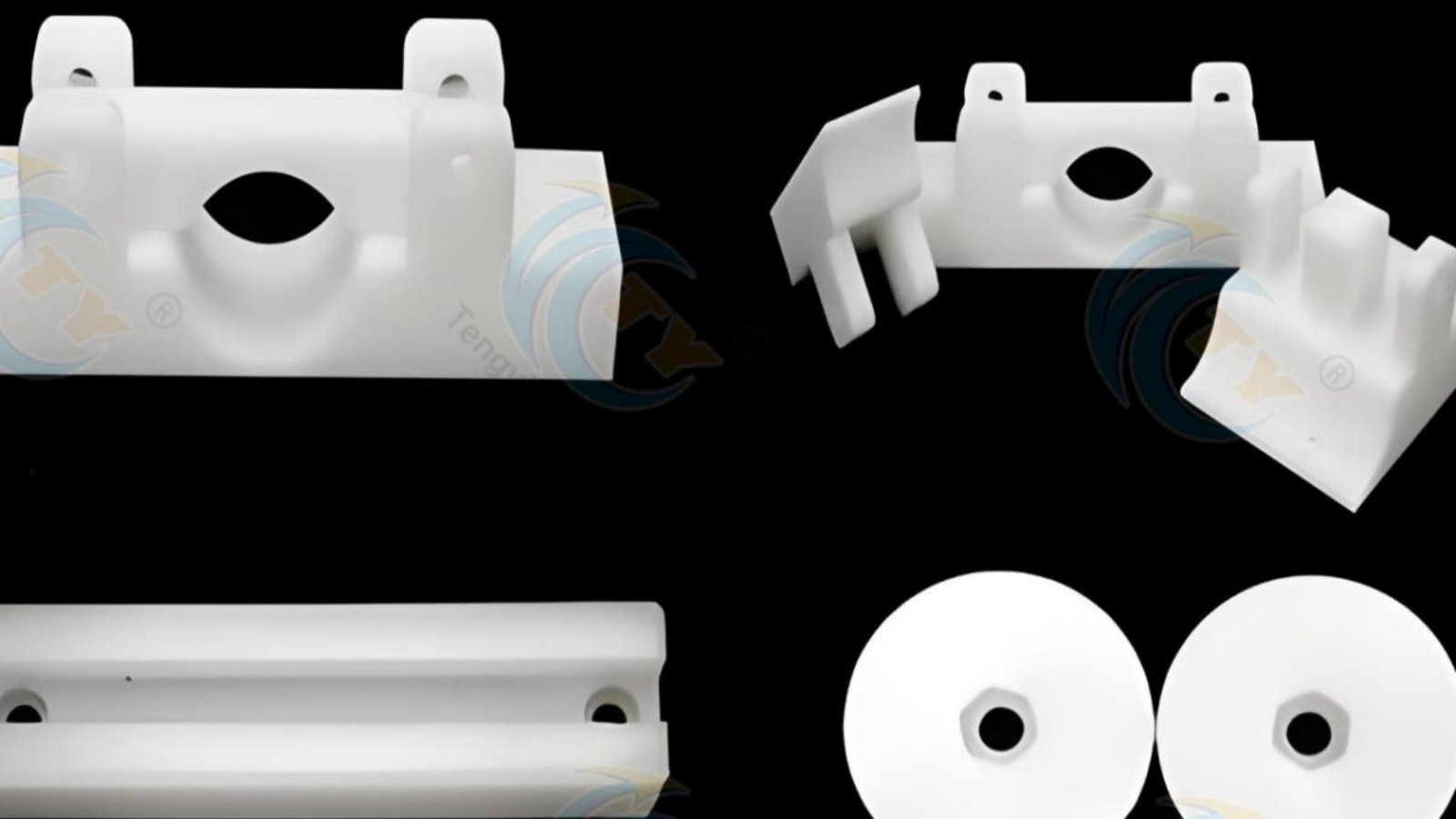
Multiple small ESD plastic parts neatly arranged
Small components made from ESD plastic, organized for inspection or use

When you think about ESD plastics, consider their vital roles in industries like electronics manufacturing and semiconductor production. These materials help protect sensitive components in cleanrooms and medical packaging, ensuring safety and reliability.

You'll also find ESD plastics in conveyor systems, trays, and storage bins, showcasing their versatility across various applications.

1. Electronics Manufacturing & Semiconductor Industry

In the fast-paced world of electronics manufacturing and the semiconductor industry, managing static electricity is essential for protecting sensitive components. You’ll find that ESD plastics play a pivotal role in this environment by ensuring safety and efficiency.

Here’s how they help streamline your processes:

  1. 1. Device Housings: Prevent static damage during assembly and transport.
  2. 2. Protective Packaging: Safeguard delicate components from electrostatic discharge.
  3. 3. Custom Trays: Organize parts effectively while minimizing contamination risks.
  4. 4. Workstation Materials: Enhance safety for employees handling sensitive electronics.

2. Cleanrooms and Medical Packaging

Cleanroom environments require the same meticulous attention to static management as electronics manufacturing and the semiconductor industry. In these controlled spaces, using ESD plastics is vital for protecting sensitive equipment and ensuring product integrity.

You’ll find ESD plastics in medical packaging, where they safeguard essential devices from static damage during transport and storage. They contribute to a sterile environment, minimizing contamination risks.

3. Conveyor Systems, Trays, Storage Bins, and More

As you explore the diverse applications of ESD plastics, conveyor systems, trays, storage bins, and other materials play a crucial role in various industries. These components not only protect sensitive items but also enhance efficiency in operations. Here’s how they contribute:

  1. 1. Conveyor Systems: Streamline the movement of goods, ensuring safe transport of electronic components.
  2. 2. Trays: Organize parts with designated slots, making retrieval easy and reducing the risk of damage.
  3. 3. Storage Bins: Safeguard items from static buildup while providing easy access and organization.
  4. 4. Custom Packaging: Tailored solutions protect sensitive electronics during transport and storage.

Using ESD plastics in these applications fosters a sense of community, ensuring everyone can work safely and efficiently together.

Anti-Static Plastic vs Conductive Plastic vs ESD Materials

Black ESD POM sheet placed in front of a production workshop
Premium black ESD POM sheet ready for machining, with factory background

When considering ESD materials, it’s vital to understand the differences between anti-static, conductive, and dissipative plastics. Each type has its unique surface resistivity and application, impacting your choice based on specific needs.

Let’s explore how to select the right material to guarantee effective static control in your projects.

1. Surface Resistivity Comparison Table

Understanding the differences in surface resistivity among anti-static plastics, conductive plastics, and ESD materials is essential for effective application in various industries. Here's a quick comparison to help you visualize their resistivity levels:

  1. 1. Anti-Static Plastics: Surface resistivitybetween 10^9 - 10^12 ohms/sq, designed to prevent static buildup.
  2. 2. Dissipative Plastics: Surface resistivity between 10^6 - 10^9 ohms/sq, controlling static discharge over time.
  3. 3. Conductive Plastics: High conductivity <10^6 ohms/sq, allowing for rapid static charge dissipation.
  4. 4. Insulative Plastic: Does not conduct (resistivity >10¹² Ω)

2. How to Choose the Right Material Based on Application

Choosing the right material for static control hinges on understanding the specific needs of your application.

If you're dealing with sensitive electronics, conductive plastics might be your best bet for quick static discharge.

For environments where static buildup needs to be controlled over time, dissipative plastics offer a balanced solution.

If your focus is on preventing static in low-humidity areas, anti-static plastics are ideal.

Think about your operational environment and the level of static protection required.

Remember, selecting the right material not only enhances product reliability but also fosters a sense of security for you and your team.

Why Choose Tengyi Plastic as Your ESD Plastic Supplier?

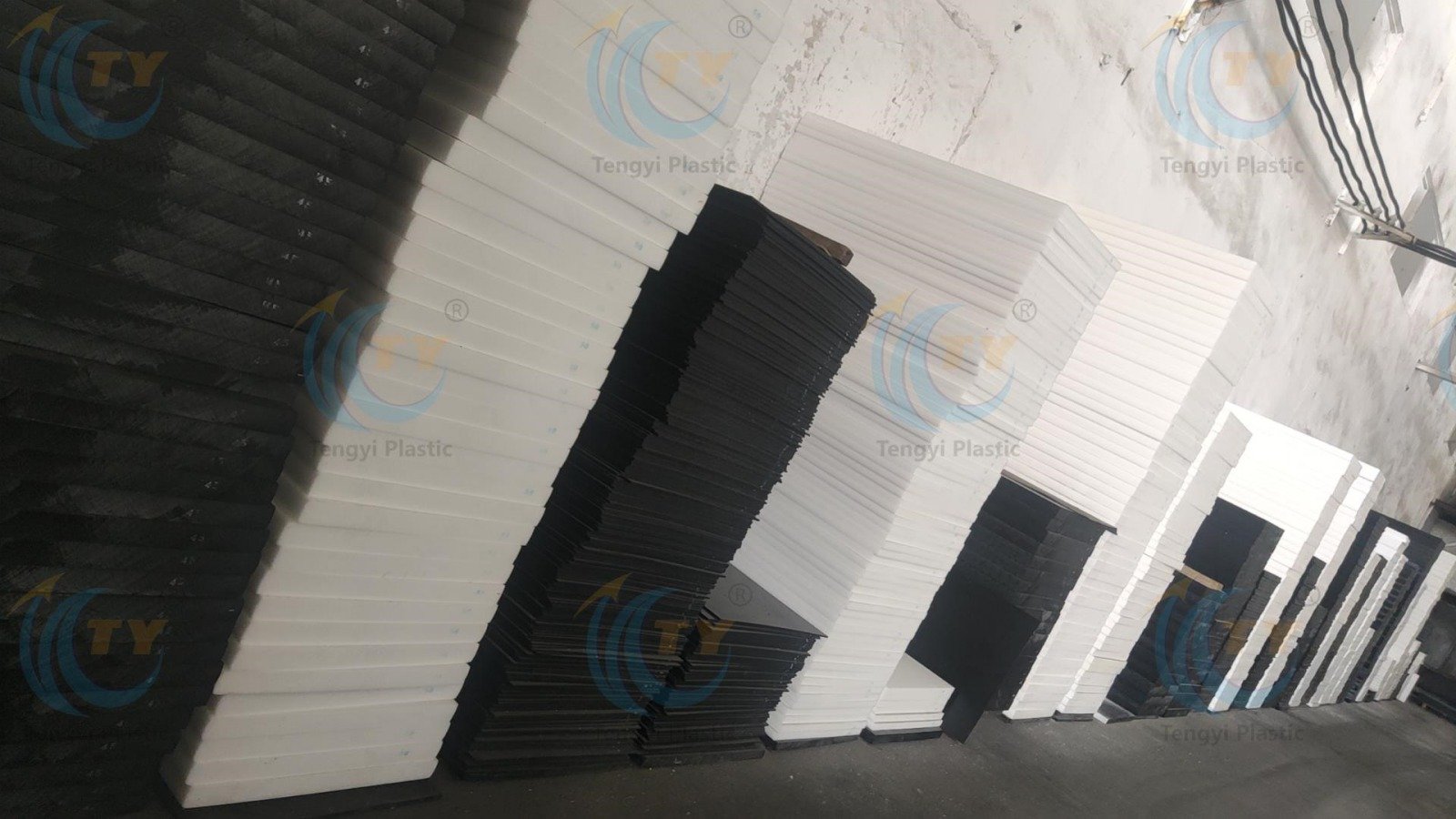
Black and white POM sheets and pom rods stacked in warehouse
POM sheet and pom rod inventory in various sizes, ready for dispatch

When selecting Tengyi Plastic as your ESD plastic supplier, you’ll benefit from strong stock and competitive pricing that meets your project needs.

Plus, their engineering support and fast quotation process guarantee you get the right solutions quickly.

With global shipping and dedicated customer service, you’ll have a reliable partner every step of the way.

1. Strong Stock & Competitive Price of ESD Plastics

If you’re looking for a reliable ESD plastic supplier, Tengyi Plastic stands out for its strong stock and competitive pricing. You'll appreciate the benefits of partnering with us, including:

  1. 1. Extensive Inventory: We maintain a diverse range of ESD plastics, ensuring you find exactly what you need.
  2. 2. Affordable Rates: Our pricing structure is designed to fit your budget without compromising quality.
  3. 3. Quick Turnaround: With ample stock, you’ll receive your products promptly, minimizing delays in your projects.
  4. 4. Garantia de qualidade: We prioritize high standards, ensuring that every product meets industry requirements.

Joining hands with Tengyi Plastic means you’re not just a customer; you're part of a community committed to excellence and innovation in ESD solutions.

2. Engineering Support and Fast Quotation

Tengyi Plastic not only offers a strong stock and competitive pricing but also provides invaluable engineering support and fast quotations tailored to your specific needs.

When you partner with us, you gain access to a dedicated team ready to address your challenges and enhance your projects. We recognize that every requirement is unique, and we’re here to collaborate closely with you, ensuring that your goals are met efficiently.

Our streamlined quotation process means you won’t be left waiting; you’ll receive timely responses that help you keep your projects on track.

With Tengyi, you’re not just a customer—you’re part of a community that values innovation and quality. Let’s work together to create solutions that truly matter!

3. Global Shipping and Customer Service

Choosing the right supplier for ESD plastics can make a significant difference in your operations, especially when it comes to global shipping and exceptional customer service. When you partner with Tengyi Plastic, you’ll experience:

  1. 1. Reliable Shipping: Your orders arrive on time, no matter where you're in the world.
  2. 2. Personalized Support: Our dedicated team understands your unique needs and is ready to assist.
  3. 3. Transparent Communication: You’ll always know the status of your order, eliminating surprises.
  4. 4. Garantia de qualidade: We ensure that each product meets rigorous safety and performance standards.

With Tengyi Plastic, you’re not just a customer; you’re part of a community that values quality, efficiency, and support.

Let's help you elevate your ESD plastic solutions today!

Perguntas frequentes

How Do Environmental Factors Affect ESD Plastic Performance?

Environmental factors like humidity and temperature considerably impact ESD plastic performance. You’ll find that higher humidity enhances charge dissipation, while low humidity can increase static buildup, affecting the effectiveness of your materials in preventing damage.

What Testing Methods Verify ESD Plastic Effectiveness?

To verify ESD plastic effectiveness, you can conduct tests like surface resistivity and charge decay evaluations. These methods guarantee your materials meet industry standards, keeping your products safe and reliable in static-sensitive environments.

Can ESD Plastics Be Recycled or Reused?

Yes, you can recycle or reuse ESD plastics, but it’s essential to guarantee they maintain their static-dissipative properties. Proper processing and separation from non-ESD materials help preserve their effectiveness and contribute to sustainable practices.

What Are the Costs Associated With ESD Plastic Materials?

When considering ESD plastic costs, you’ll find factors like material type, volume, and supplier influence pricing. Investing wisely guarantees you protect sensitive components, enhancing product reliability and safety while meeting industry standards for performance.

How Do I Maintain ESD Plastic Products Over Time?

To sustain your ESD plastic products over time, regularly clean them with non-abrasive materials, avoid exposure to extreme temperatures, and store them in a controlled environment. This ensures their longevity and effective static control.

Conclusão

In summary, ESD plastic is vital for protecting sensitive electronics from static damage. By understanding its properties and applications, you can make informed choices for your projects. Whether you need anti-static, conductive, or static dissipative materials, selecting the right type is essential. With reputable suppliers like Tengyi Plastic in China, you can find high-quality ESD plastics tailored to your needs. Don’t compromise on safety—choose ESD plastic to guarantee reliability and longevity for your electronic components.


Folhas rígidas de PVC transparente: Guia do comprador global e aplicações do setor

Folhas rígidas de PVC transparente: Guia do comprador global e aplicações do setor

Ao considerar os materiais para seu próximo projeto, as chapas rígidas de PVC transparente podem ser exatamente o que você precisa. Elas oferecem uma série de vantagens, desde a durabilidade até a relação custo-benefício, tornando-as uma escolha popular em vários setores. Mas o que exatamente as diferencia de outras opções? Vamos explorar seus benefícios e aplicações exclusivos para ver como eles podem atender às suas necessidades específicas. Você verá que as possibilidades são bastante amplas.

O que é uma chapa de PVC rígido transparente?

Pilha de amostras de chapas rígidas de PVC transparente em várias espessuras
Uma coleção de amostras de folhas de PVC rígido e transparente empilhadas, mostrando diferentes espessuras.

A chapa rígida de PVC (cloreto de polivinila) transparente é um material termoplástico durável que combina transmissão de luz 85-88% com dureza Shore D 80-85. Essas chapas oferecem excepcional resistência ao impacto (55 KJ/m² de acordo com a ASTM D256) e suportam condições climáticas extremas, inclusive exposição prolongada aos raios UV e flutuações de temperatura (-30°C a +70°C). Diferentemente dos plásticos padrão, eles demonstram inércia química a ácidos, álcalis (pH 2-12) e solventes industriais, mantendo a estabilidade dimensional. A usinabilidade do material permite a fabricação precisa usando ferramentas convencionais - compatível com corte (tolerância de ±0,1 mm), termoformagem e soldagem por solvente - tornando-o ideal para aplicações que exigem transparência semelhante à do vidro sem fragilidade. As certificações FDA 21 CFR 177.2600 e UL 94 -5VA garantem a conformidade para ambientes em contato com alimentos e com classificação de fogo.

Com um peso de 1,41 g/cm³, a chapa de PVC rígido transparente é resistente e fácil de trabalhar, o que a torna ideal para seus projetos.

Especificações técnicas principais

As folhas rígidas de PVC transparente são projetadas com cloreto de polivinila de alta qualidade, oferecendo resistência superior e transparência impressionante. Essas folhas rígidas de PVC transparente apresentam excelente resistência a intempéries e estabilidade química, o que as torna ideais para várias aplicações. A superfície lisa e plana não é absorvente e é resistente à deformação, garantindo longevidade e durabilidade.

EspecificaçãoDetalhes
Densidade1,4 g/cm³
Faixa de espessura0,5 - 15 mm
Tamanhos disponíveis1000x2000 mm, 1220x2440 mm
Transmissão de luz85-88%
Resistência ao impacto10 vezes mais resistente a impactos do que o acrílico
Estabilidade UVO PVC não modificado se degrada, apresentando amarelamento em 2 a 3 anos
Resistência químicaResiste a ácidos, álcalis e produtos químicos para piscinas
Classificação de incêndioUL94-5VA Queima de superfície
CorTransparente/Claro

Com esses atributos, seus projetos que usam chapas rígidas de cloreto de polivinila transparente brilharão lindamente, proporcionando a clareza e a proteção de que você precisa. Abrace as possibilidades com essa versátil folha de polímero transparente!

7 Vantagens competitivas da chapa de PVC rígido e transparente

Stack of 5mm thick rigid clear PVC sheets on a pallet in the workshop
Newly manufactured 5mm rigid clear PVC sheets placed on a pallet in the workshop.

Embora muitos materiais disputem sua atenção no mercado de plástico transparente, as vantagens competitivas das chapas rígidas de PVC transparente se destacam claramente.

  1. 1. Eficiência de custo: 40% mais barato do que o policarbonato.
  2. 2. Excelente resistência química: Resiste a ácidos/alcalinos (pH 2-12).
  3. 3. Usinabilidade: Tolerância de corte a laser ±0,1 mm.
  4. 4. Suprema retardância à chama: Certificação UL94-5VA.
  5. 5. Resistência à umidade: <0,01% absorção de água.
  6. 6. Transmissão de luz85-88% muito próximo ao PC.
  7. 7. Personalização: A folha rígida de PVC transparente pode ser personalizada como antiestática (106-108 Ω) e classes resistentes a UV.

Você pode acessar essas chapas facilmente na Tengyi Plastic, uma fábrica respeitável de chapas de PVC rígido e transparente, garantindo que você atenda às necessidades do seu projeto com confiança e clareza.

Aplicações e casos de uso no setor de chapas rígidas de PVC transparente

Hand selecting between 2mm and 3mm rigid clear PVC sheets
A hand comparing 2mm and 3mm thick rigid clear PVC sheets.

Ao considerar as aplicações das chapas rígidas de PVC transparente, você verá que elas se encaixam perfeitamente em vários setores. Desde a construção e a arquitetura até inovações médicas, sinalização e até mesmo embalagens, esse material versátil tem tudo o que você precisa.

Sua durabilidade e clareza o tornam a escolha ideal também para acessórios mecânicos.

Construção e arquitetura

As chapas rígidas de PVC transparente se tornaram um divisor de águas nos setores de construção e arquitetura graças à sua excepcional durabilidade, flexibilidade e transparência.

Você verá que essas chapas são ideais para janelas, claraboias e divisórias, oferecendo uma alternativa econômica ao vidro tradicional. Com sua alta transmissão de luz e resistência a intempéries, elas garantem que seus projetos não apenas tenham uma ótima aparência, mas também resistam ao teste do tempo.

Além disso, elas são fáceis de cortar e moldar, o que facilita muito a instalação. Seja para projetar um escritório moderno ou uma casa aconchegante, as chapas de PVC transparente oferecem a versatilidade de que você precisa para dar vida à sua visão.

Inovações médicas

Na área médica, a versatilidade das chapas de PVC rígido está se mostrando inestimável, assim como suas aplicações na construção e na arquitetura.

As chapas rígidas de PVC transparente são essenciais para a criação de barreiras de proteção, garantindo a segurança em clínicas e hospitais. Sua clareza e resistência ao impacto fazem delas uma escolha confiável para a fabricação de equipamentos médicos, permitindo fácil visibilidade e acesso.

Além disso, são compatíveis com processos de esterilização, o que é vital em ambientes de saúde. As folhas rígidas de PVC transparente são fáceis de cortar e moldar, o que as torna perfeitas para projetos personalizados.

Sinalização e displays

Transparent display stand made from rigid clear PVC sheet on a desk
A small transparent display stand crafted from rigid clear PVC sheet, showcasing its application as a desktop organizer.

A sinalização e os displays prosperam com visibilidade e durabilidade, e as chapas rígidas de PVC transparente oferecem exatamente isso. Essas chapas são perfeitas para ambientes de varejo, onde a sinalização vibrante do ponto de venda atrai os clientes. Sua excelente transmissão de luz garante que suas mensagens brilhem intensamente, enquanto a resistência ao impacto mantém a ótima aparência.

Seja para criar displays atraentes ou barreiras de proteção, as chapas de PVC transparente são versáteis e fáceis de trabalhar. Além disso, sua resistência a intempéries e produtos químicos significa que elas são feitas para durar, o que as torna uma opção confiável para várias aplicações.

Ao explorar suas opções, lembre-se de que a escolha de chapas de PVC transparentes não apenas eleva sua sinalização, mas também promove um senso de conexão com seu público, demonstrando seu compromisso com a qualidade e a clareza.

Acessórios mecânicos

Os acessórios mecânicos fabricados com chapas rígidas de PVC transparente oferecem uma combinação de durabilidade e versatilidade que é difícil de superar. Você verá que esses materiais brilham em aplicações em vários setores. Da construção à saúde, eles servem como componentes confiáveis para tudo, desde janelas e divisórias até barreiras de proteção.

Além disso, elas são fáceis de cortar e moldar, permitindo que você personalize os componentes para atender perfeitamente às suas necessidades. Seja para criar sinalização ou gabinetes, as chapas rígidas de PVC transparente oferecem a resistência mecânica na qual você pode confiar.

Junte-se à comunidade de inovadores que usam esse material versátil para aprimorar seus projetos e soluções.

Materiais de embalagem

Os materiais de embalagem feitos de folhas rígidas de PVC transparente estão se tornando cada vez mais populares devido à sua durabilidade e versatilidade. Esses materiais oferecem excelente proteção para os produtos e, ao mesmo tempo, permitem visibilidade, o que os torna ideais para várias aplicações.

Com sua resistência ao impacto e clareza, essas folhas não são apenas funcionais; elas também aprimoram a apresentação geral.

A escolha de chapas de PVC rígido transparente para seus materiais de embalagem significa que você está optando por qualidade e confiabilidade, contribuindo para o sucesso de seus produtos.

Coberturas de maquinário industrial

Se você atua no setor industrial ou de manufatura, as chapas rígidas de PVC transparente são uma excelente opção para coberturas de maquinário devido à sua excelente durabilidade e resistência a impactos.

Essas chapas oferecem proteção essencial e, ao mesmo tempo, permitem a visibilidade do maquinário, promovendo um senso de pertencimento na equipe, pois todos ficam informados sobre as operações. Sua resistência a intempéries e flexibilidade as tornam ideais para vários ambientes, garantindo que se adaptem às suas necessidades específicas.

Prós:

Contras:

Assorted thicknesses of rigid clear PVC sheet samples on a table, exhibiting colorful light refraction effects
Various thicknesses of rigid clear PVC sheet samples arranged on a table, with light refracting to produce a spectrum of colors

Como a demanda por materiais duráveis e versáteis continua a aumentar, o mercado global de cloreto de polivinila (PVC) - especialmente o de chapas de PVC rígido transparente - deverá crescer consideravelmente nos próximos anos. Você verá que regiões como a Ásia-Pacífico lideram o mercado, impulsionadas por investimentos significativos na produção e no aumento da produção de chapas de PVC rígido transparente.

A adoção dessas tendências o ajudará a se manter à frente no cenário do mercado em evolução.

Visão geral do mercado e potencial de crescimento

Com o aumento da demanda global por materiais versáteis, o mercado de PVC - com a chapa de PVC rígido transparente como um dos principais impulsionadores - deverá experimentar um crescimento significativo, com uma taxa de crescimento anual composta (CAGR) projetada superior a 4% de 2025 a 2030.

A recuperação pós-pandemia está acelerando a adoção em setores como equipamentos médicos e sinalização, nos quais a clareza óptica e a resistência química da chapa de PVC rígido transparente são essenciais.

Análise do mercado regional

Dada a crescente demanda por materiais versáteis, o mercado regional de PVC está passando por mudanças que refletem tanto as oportunidades de crescimento quanto os desafios.

O domínio da Ásia-Pacífico decorre das aplicações da chapa de PVC rígido transparente nos painéis internos de automóveis da Índia e nas fachadas de edifícios resistentes a raios UV da China. Na América do Norte, 63% dos novos hospitais agora especificam a chapa de PVC rígido transparente de grau médico para barreiras de controle de infecção

Tendências futuras no setor de PVC

Embora muitos setores tenham enfrentado contratempos durante a pandemia da COVID-19, o mercado de PVC está se recuperando, apresentando perspectivas de crescimento promissoras. O aumento da demanda dos setores de construção, eletrônicos e saúde destaca a versatilidade e a durabilidade do PVC.

Ao navegar por esse cenário em evolução, espere que as chapas de PVC rígido e transparente desempenhem um papel indispensável em várias aplicações. Com foco em inovação e sustentabilidade, o futuro parece brilhante para o PVC, promovendo um senso de comunidade entre usuários e fabricantes.

A Tengyi Plastic é especialista na fabricação de chapas rígidas de PVC transparente

Stacked rigid clear PVC sheet samples of varying thicknesses on a table, showcasing high light transmission properties
Stacked samples of rigid clear PVC sheets in different thicknesses on a table, highlighting their excellent light transmission capabilities.

A Tengyi Plastic se destaca como fabricante líder de chapas rígidas de PVC transparente, fornecendo plásticos de engenharia de alta qualidade que atendem a diversas necessidades do setor. Desde 2007, a empresa construiu uma reputação de excelência, com foco em qualidade, honestidade e benefício mútuo. Suas linhas de produção de última geração garantem um desempenho consistente, respaldado por testes rigorosos.

Grande estoque pronto para necessidades urgentes

A Tengyi Plastic possui um estoque de 500 toneladas de grandes estoques prontos de chapas rígidas de PVC transparente, garantindo que você obtenha os materiais de que precisa sem demora.

Quer esteja trabalhando em um projeto de sinalização ou construção, nossa ampla seleção foi projetada para atender às suas demandas. Você apreciará a tranquilidade de saber que seus materiais estão prontamente disponíveis.

Junte-se aos inúmeros clientes satisfeitos que fizeram da Tengyi Plastic seu fornecedor preferencial.

Soluções personalizadas: Espessura sob medida, opções de cores

Na Tengyi Plastic, reconhecemos que cada projeto tem requisitos exclusivos, e é por isso que oferecemos soluções personalizadas para chapas rígidas de PVC transparente.

Você pode escolher entre uma variedade de espessuras, garantindo que suas chapas atendam às demandas específicas de sua aplicação. Não importa se você precisa de algo leve para facilitar o manuseio ou de uma opção mais espessa para aumentar a durabilidade, nós cuidamos de você.

Além disso, nossas opções de cores permitem que você personalize suas chapas, criando um ajuste perfeito para a estética de sua marca ou projeto. Acreditamos em transformar sua visão em realidade, portanto, você pode ter certeza de que nossas soluções personalizadas proporcionarão a funcionalidade e o estilo de que você precisa.

Vamos trabalhar juntos para criar algo excepcional!

Serviços de corte de precisão

Soluções personalizadas para chapas rígidas de PVC transparente preparam o terreno para nossos serviços de corte de precisão, projetados para atender às suas necessidades específicas. Na Tengyi Plastic, reconhecemos que cada projeto é único, e nossos serviços de corte garantem que você receba as dimensões exatas necessárias para sua aplicação.

Nossa equipe qualificada usa tecnologia avançada para oferecer cortes limpos e precisos que aprimoram seus designs.

P&D avançado: inovação em chapas de PVC rígido transparente antiestático e resistente a UV

Com o aumento da demanda por materiais de alto desempenho, as inovações em chapas de PVC rígido transparente antiestático e resistente a raios UV se tornaram essenciais. Você verá que esses avanços não apenas aumentam a durabilidade, mas também garantem a segurança em várias aplicações. Ao priorizar a resistência aos raios UV, essas chapas protegem contra o amarelamento e a degradação, enquanto as propriedades antiestáticas evitam o acúmulo de poeira, tornando-as perfeitas para ambientes limpos.

RecursoBenefícios
Resistência aos raios UVEvita o amarelamento e aumenta a vida útil
AntiestáticoReduz o acúmulo de poeira e aumenta a segurança

Essas inovações criam um ambiente inclusivo onde a segurança encontra o desempenho, permitindo que seus projetos brilhem com confiança e clareza. Escolha os materiais certos e você se sentirá parte de uma comunidade dedicada à excelência.

Perguntas frequentes

Como faço para limpar e manter as chapas rígidas de PVC transparente?

Para limpar e manter suas chapas rígidas de PVC transparente, use um pano macio com água e sabão neutro. Evite produtos químicos agressivos e sempre seque-as com cuidado para manter a transparência e a durabilidade intactas.

As folhas rígidas de PVC transparente podem ser recicladas?

Sim, você pode reciclar folhas rígidas de PVC transparente. Basta verificar as diretrizes locais de reciclagem, pois nem todas as instalações as aceitam. O descarte adequado ajuda a manter nosso ambiente limpo e promove um futuro sustentável para todos.

Quais são as opções de espessura disponíveis para as chapas rígidas de PVC transparente?

Você encontrará folhas rígidas de PVC transparente disponíveis em várias opções de espessura, normalmente variando de 0,5 mm a 15 mm. Essa versatilidade facilita a escolha da espessura perfeita para suas necessidades específicas de aplicação.

Como as chapas rígidas de PVC transparente se comparam às chapas de acrílico?

Ao comparar as chapas rígidas de PVC transparente com as chapas de acrílico, você verá que o PVC oferece melhor resistência química e durabilidade. A transparência do acrílico é impressionante, mas a resistência ao impacto do PVC o torna uma opção mais versátil para muitas aplicações.

Quais são os limites de temperatura das chapas rígidas de PVC transparente?

Você verá que as chapas rígidas de PVC transparente podem suportar temperaturas de até 60°C (140°F). Além disso, elas podem começar a perder sua integridade estrutural, portanto, é melhor mantê-las dentro dessa faixa para obter o desempenho ideal.

Conclusão

Em resumo, as chapas rígidas de PVC transparente oferecem uma excelente alternativa ao vidro tradicional com sua durabilidade, versatilidade e economia. Seja na área de construção, saúde ou sinalização, essas chapas podem atender às suas necessidades e, ao mesmo tempo, apoiar a sustentabilidade. Com fabricantes confiáveis como a Tengyi Plastic, você pode garantir produtos de alta qualidade que atendem aos padrões do setor. Aproveite os benefícios das chapas rígidas de PVC transparente e descubra como elas podem aprimorar seus projetos hoje mesmo!

What Is POM Sheet/POM Rod? Properties, Applications, and Expert Buying Guide

What Is POM Sheet/POM Rod? Properties, Applications, and Expert Buying Guide

When it comes to high-performance materials, POM sheets/POM Rods stand out for their durability and versatility. Made from polyoxymethylene, they offer excellent strength and wear resistance, making them ideal for various applications. Whether you’re in automotive or electronics, understanding the properties and grades of POM sheets/POM Rods can help you make informed choices. But what exactly sets them apart from other materials, and how can you choose the right one for your needs?

What Is POM Sheet/POM Rod?

What exactly is a POM sheet/POM Rod? A POM sheet/POM Rod, made from polyoxymethylene material, is a versatile acetal plastic known for its strength and durability.

You’ll find that this pom plastic is often available in two types: POM-C and POM-H. The POM-C, or copolymer, offers enhanced chemical resistance, making it ideal for various applications.

This acetal pom is lightweight yet sturdy, making it perfect for precision parts like gears and bearings.

When you use POM plastic material, you're choosing a solution that provides excellent dimensional stability and low moisture absorption.

Whether in automotive parts or consumer electronics, POM sheets/POM Rods offer a reliable choice for those who value quality and performance in their projects.

Key Properties of POM Sheets/POM Rods

When considering POM sheets/POM Rods, you'll appreciate their high mechanical strength and rigidity, making them ideal for demanding applications.

Their excellent wear resistance and low friction properties enhance longevity, while good dimensional stability guarantees precision in various conditions.

Additionally, POM sheets/POM Rods resist chemicals and moisture, maintaining performance even in challenging environments.

1. High Mechanical Strength and Rigidity

POM sheets/POM Rods boast remarkable mechanical strength and rigidity, making them ideal for demanding applications. When you choose POM, you’re opting for a material that can withstand heavy loads and resist deformation, ensuring your projects are built to last.

Whether you’re crafting precision components for automotive parts or creating durable fixtures in the medical field, POM's high tensile strength assures you of reliability. You'll appreciate how well it maintains its shape under stress, fostering a sense of confidence in your creations.

By integrating POM sheets/POM Rods into your work, you’re joining a community that values durability and performance. Elevate your projects with POM, and feel the difference in quality and resilience.

You belong in this innovative world where strength meets functionality.

2. Excellent Wear Resistance and Low Friction

Building on POM's impressive mechanical strength, its excellent wear resistance and low friction properties further enhance its appeal for a variety of applications. These features make POM sheets/POM Rods ideal for components that experience constant motion, such as gears and bearings. By minimizing friction and wear, POM not only extends the lifespan of your parts but also improves overall efficiency.

Embrace POM for your projects and experience its exceptional performance!

3. Good Dimensional Stability

How does POM maintain its shape under varying conditions? POM sheets/POM Rods exhibit excellent dimensional stability, ensuring they hold their form even when exposed to temperature fluctuations and humidity changes. This stability is essential for precision parts, like gears and bearings, where tight tolerances matter.

When you choose POM, you’re opting for a material that won’t warp or shrink, creating a reliable fit in your applications. Its low thermal expansion means you can count on consistent performance, fostering a sense of trust in the materials you use.

Whether you're in manufacturing or design, POM's stability helps create a cohesive environment where everything works seamlessly together, enhancing both your projects and your sense of community.

4. Chemical and Moisture Resistance

Maintaining dimensional stability is only part of what makes POM sheets/POM Rods a reliable choice for various applications. Their exceptional chemical and moisture resistance guarantees they perform well in challenging environments.

You’ll find that POM sheets/POM Rods can withstand exposure to many solvents and oils without degrading, making them a go-to material for industrial use.

5. Temperature Resistance (Typical Range)

While POM sheets/POM Rods offer excellent performance in various applications, their temperature resistance is an essential factor to contemplate. Generally, POM can withstand temperatures ranging from -40°C to 120°C. This range makes it suitable for many environments, but it’s important to note that prolonged exposure to temperatures above 160°C can impact its performance.

For your projects, understanding this thermal limit guarantees you’ll achieve the durability and reliability you need. Additionally, if you're working in extreme conditions, consider the specific requirements of your application.

With POM sheets/POM Rods, you’re choosing a material that balances strength and temperature stability, making it a dependable choice for those who value quality and performance in their work.

Common Applications of POM Sheets/POM Rods

When you consider POM sheets/POM Rods, you'll find they're incredibly versatile across various industries.

From automotive parts like gears and fuel systems to precision engineering components, POM sheets/POM Rods play a vital role in enhancing performance and durability.

They also meet food safety standards, making them ideal for food processing equipment and consumer electronics.

1. Automotive parts (gears, bushings, fuel systems)

As automotive technology evolves, the demand for high-performance materials like POM sheets/POM Rods increases, particularly for critical components such as gears, bushings, and fuel systems.

You’ll find POM’s remarkable qualities make it a go-to choice in automotive applications, providing reliability and efficiency.

2. Industrial machinery components (bearings, pulleys)

Building on the reliability seen in automotive parts like gears and bushings, POM sheets/POM Rods are also highly effective in industrial machinery components such as bearings and pulleys. When you choose POM for these applications, you’re opting for materials that provide excellent wear resistance and low friction, ensuring smooth operations.

Because POM maintains its shape under stress, it’s perfect for components that require precision and durability. You'll find that POM’s resilience translates to longer lifespans for your machinery, reducing downtime and maintenance costs.

3. Food processing equipment (FDA-compliant types)

How can POM sheets/POM Rods enhance the safety and efficiency of food processing equipment? By utilizing FDA-compliant POM sheets/POM Rods, you ensure that your equipment meets strict safety standards while benefiting from the material's superior properties.

These sheets/rods provide durability and resistance to wear, making them ideal for various applications in food processing.

Using POM sheets/POM Rods in your food processing equipment not only improves safety but also fosters a reliable environment, connecting with others who prioritize quality and compliance in the industry.

4. Consumer electronics and tools

What makes POM sheets/POM Rods a go-to choice in consumer electronics and tools? Their impressive strength and low friction properties make them ideal for various applications. You’ll find POM sheets/POM Rods used in everything from gears to keypads, enhancing the durability and performance of your favorite devices. Here's a quick overview of how POM stands out:

Application | Benefits

With POM sheets/POM Rods, you’re not just getting functionality; you’re investing in products designed for longevity and reliability, making your everyday experiences smoother and more enjoyable.

5. Precision engineering

Why is POM such a popular choice in precision engineering? Its remarkable properties make it ideal for producing high-quality components that require exact tolerances and durability.

When you choose POM, you’re tapping into a material that stands out in various applications:

How to Choose the Right POM Sheet/POM Rod for Your Project

Choosing the right POM sheet/POM Rod for your project can feel overwhelming, but it doesn’t have to be. By understanding your specific needs, you can confidently select the best option.

Selecting the ideal POM sheet/POM Rod may seem daunting, but knowing your requirements will guide you to the perfect choice.

Keep these key factors in mind:

Tips for Working With POM Sheets/POM Rods

To effectively work with POM sheets/POM Rods, it's crucial to understand their unique properties and how they respond to different machining methods. Start by using sharp tools; this minimizes chip formation and guarantees a clean cut. Keep your feed rates moderate to prevent overheating, which can lead to warping.

When drilling, use a slower speed and don’t forget to apply coolant to maintain temperature control. Always clamp securely to avoid movement during machining. If you're shaping edges, consider a radius to reduce stress concentrations.

Lastly, take advantage of POM's self-lubricating properties; it helps in reducing friction in applications. By following these tips, you'll foster a sense of community with others working with POM, enhancing collaboration and shared success.

Conclusion: Tengyi Plastic – Your Reliable POM Sheet & POM Rod Supplier from China

When it comes to sourcing POM sheets e POM rods, working with a dependable supplier is key to ensuring consistent quality and long-term success. At Plástico Tengyi, we are committed to providing high-performance polyoxymethylene materials tailored to the needs of engineers, fabricators, and industrial buyers worldwide.

By partnering with Tengyi Plastic, you benefit from:

Choosing Tengyi Plastic means more than buying raw materials—it means building a partnership based on trust, reliability, and shared standards of excellence. As your trusted POM supplier in China, we’re here to help you move forward with confidence.ing in a partnership that supports your goals and enhances your capabilities.

Perguntas frequentes

How Does POM Sheet/POM Rod Perform in Extreme Temperatures?

POM sheets/POM Rods maintain stability in extreme temperatures, performing well up to 160°C for short periods. You’ll appreciate their resilience and low thermal expansion, making them ideal for precision applications even in challenging environments.

Can POM Sheets/POM Rods Be Recycled or Reused Effectively?

You’ll find recycling POM sheets/POM Rods challenging due to their thermal properties. While some facilities accept them, reusing POM sheets/POM Rods for crafting or DIY projects can be a creative way to minimize waste and be resourceful.

What Are the Color Options Available for POM Sheets/POM Rods?

You’ll find POM sheets/POM Rods in various colors, including natural white, black, and custom shades. This variety allows you to choose what suits your project best, ensuring a perfect match for your design needs.

How Should POM Sheets/POM Rods Be Stored for Longevity?

To guarantee POM sheets/POM Rods last, store them in a cool, dry place, away from direct sunlight. Keep them flat or in a vertical position, avoiding heavy stacking. This way, you’ll maintain their quality and integrity.

Are There Specific Certifications for POM Sheets/POM Rods in Different Industries?

Yes, there are specific certifications for POM sheets/POM Rods across various industries, like FDA approval for food applications or ISO standards for quality assurance. You’ll want to check these certifications based on your intended use.

Conclusão

In summary, choosing the right POM sheet/POM Rod is essential for ensuring your project's success. With its impressive properties and versatility, POM is a top choice for various applications. Remember to take into account factors like grade certifications and supplier support when making your selection. By following the expert buying guide and tips for working with POM sheets/POM Rods, you can achieve reliable, long-lasting performance in your projects. Trust a reputable supplier in China to meet your needs and elevate your results.

Why “Anti-Static” Often Refers to Static Dissipative Plastics in the Industry

Why “Anti-Static” Often Refers to Static Dissipative Plastics in the Industry

ESD POM sheet samples in black and white with anti-static tester
ESD POM samples in various thicknesses tested for anti-static performance

In the world of ESD (Electrostatic Discharge) protection, the terms “anti-static,” “ESD-safe,” “static dissipative,” and “conductive” are often used interchangeably. However, this overlap in terminology can be misleading. While each of these terms refers to specific electrical properties, in many industrial and commercial settings, “anti-static” has become a generic term to describe a broad range of static-control plastics—including those that are technically static dissipative.

So why do so many people in the plastics and engineering industries refer to static dissipative materials as “anti-static” or “ESD” materials? Let’s explore the reasons behind this common practice.

Customers Don’t Always Understand the Technical Differences

Many end-users are simply looking for “plastic that prevents static.” They may not be familiar with the technical distinctions between anti-static, static dissipative, conductive, or insulative materials. As a result, industry professionals often use “anti-static” or “ESD-safe” as a general way to describe plastics designed to manage static electricity, rather than explaining the precise classifications.

Marketing Simplicity and SEO Optimization Drive Terminology

From a marketing and search engine optimization (SEO) perspective, terms like “anti-static plastic” and “ESD plastic” have significantly higher search volume than “static dissipative plastic.” To reach a broader audience, manufacturers and distributors often use the more familiar terms, even when the product is technically static dissipative.

For example:

This usage increases product visibility online and improves search rankings without confusing customers who may not understand the technical nuances.

Most Anti-Static Plastics Are Actually Static Dissipative

Many engineering plastics used for ESD protection—such as carbon-filled POM, PEEK, or policarbonato—fall into the static dissipative range by definition. Yet in product catalogs, they’re frequently labeled under general terms like:

In industrial applications, the term “anti-static” is widely accepted to include both static dissipative e conductive materials, as long as the material exhibits controlled electrical resistance that helps prevent static buildup or discharge.

More Flexibility in Plastics Industry Terminology

Unlike the electronics or semiconductor industries, where precise terminology is critical, the plastics and materials sectors often focus more on performance requirements than strict classification. If a material’s surface resistivity meets ESD-safe standards, it’s typically accepted as a static-control material—regardless of whether it’s labeled anti-static, dissipative, or conductive.

In practical applications, engineers and buyers often prioritize:

If the answer is yes, the label becomes a secondary concern.

Technical Terms vs. Real-World Usage: A Quick Comparison

TermTechnical DefinitionCommon Industry LabelFrequent Misunderstanding
Anti-static PlasticPrevents static generation (10⁹–10¹² Ω)Often used for all ESD materialsMistaken for static dissipative
Static Dissipative PlasticDischarges static at controlled rate (10⁶–10⁹ Ω)Often called “anti-static” or “ESD-safe”Rarely used explicitly in labels
Conductive PlasticConducts electricity quickly (10³–10⁶ Ω)Correctly labeled “conductive”Less confusion
Insulative PlasticDoes not conduct (resistivity >10¹² Ω)Rarely labeled; often seen as “standard plastic”Often assumed to be anti-static, which is false

Final Thoughts

Technically speaking, many plastics described as “anti-static” are actually static dissipative materials. However, due to common industry usage, customer familiarity, and SEO considerations, “anti-static” has become a convenient shorthand for a wide range of ESD-safe materials.

If you're sourcing plastics for static-sensitive applications, it's essential to go beyond the label and verify the surface resistivity e actual performance of the material. For more accurate recommendations or custom solutions, consult a supplier with experience in ESD-safe engineering plastics.

POM vs Nylon, PTFE, PP, and PEEK: How to Choose the Right Engineering Plastic

POM vs Nylon, PTFE, PP, and PEEK: How to Choose the Right Engineering Plastic

Machined plastic parts made from POM, Nylon, PTFE, PP, and PEEK materials
Various Machined Plastic Components from POM, Nylon, PTFE, PP, and PEEK

When it comes to engineering plastics, POM (polyoxymethylene)—also known as acetal—is a popular choice thanks to its excellent strength, wear resistance, and machinability. But how does it compare to other materials like Nylon (PA), PTFE, Polypropylene (PP), and PEEK? Each plastic has its strengths and weaknesses. Choosing the right one depends on your application needs—whether you’re looking for low friction, high chemical resistance, mechanical durability, or cost-efficiency.

Below is a detailed comparison to help you understand the differences between these materials and decide which one best suits your project.

Property / MaterialPOM (Acetal)Nylon (PA)PTFE (Teflon)Polipropileno (PP)PEEK
Resistência ao desgaste⭐⭐⭐⭐ Excellent – low friction, high abrasion resistance⭐⭐⭐ Medium – wears faster, especially in wet conditions⭐⭐ Poor – very low friction but soft, wears quickly⭐⭐ Poor – not ideal for high wear applications⭐⭐⭐⭐ Excellent – best-in-class
Moisture Absorption⭐ Low – retains properties in humid/wet environments❌ High – can swell and lose strength in moisture⭐ Zero – completely hydrophobic⭐ Low – good moisture resistance⭐ Low – stable in moist environments
Machinability⭐⭐⭐⭐ Easy to machine with precision tools⭐⭐⭐ Medium – tougher but can be machined⭐⭐ Difficult – soft, gummy when cutting⭐⭐ Medium – not ideal for tight tolerances⭐⭐⭐ Medium – requires special tools but accurate
Resistência à tração⭐⭐⭐⭐ Strong and rigid⭐⭐⭐ Medium – flexible and tough⭐ Low – not strong, deforms under load⭐⭐ Medium – flexible but not strong⭐⭐⭐⭐ Very high – suitable for extreme loads
Temperature ResistanceUp to 100–120°CUp to 120°CUp to 260°CUp to 100°CUp to 250–300°C
Resistência química⭐⭐⭐ Good – resists oils, fuels, solvents⭐⭐ Medium – affected by acids and bases⭐⭐⭐⭐ Excellent – almost chemically inert⭐⭐⭐ Good – resistant to acids and bases⭐⭐⭐⭐ Excellent – resistant to almost all chemicals
Cost💲💲 Medium – affordable for most industrial uses💲 Low – cheap and widely available💲💲💲 High – expensive per kg💲 Very low – commodity plastic💲💲💲💲 Very high – premium engineering plastic
Typical ApplicationsGears, bushings, sliders, food machines, precision partsBearings, conveyor rollers, cable insulationSeals, gaskets, chemical containersPackaging, tanks, low-load componentsAerospace, medical, high-performance machine parts

POM is the ideal mid-range engineering plastic: It balances wear resistance, strength, and cost better than most materials, making it perfect for precision parts, moving components, and moderate-load environments.

Understanding POM Plastics: Acetal, Delrin, POM-C and POM-H Compared

Understanding POM Plastics: Acetal, Delrin, POM-C and POM-H Compared

Black and white POM sheets and pom rods stacked in warehouse
POM sheet and pom rod inventory in various sizes, ready for dispatch

When researching engineering plastics, it's common to come across terms like Acetal, POM, Delrin, POM-Ce POM-H—often used interchangeably. However, they’re not all the same. While these materials are closely related, each refers to a specific type or grade of polyoxymethylene (POM), a high-performance thermoplastic known for its excellent strength, low friction, and dimensional stability. Understanding the differences between these terms is crucial when selecting the right material for machining parts, bearings, gears, or other precision applications. In this guide, we break down what sets Acetal homopolymer (POM-H) apart from copolymer (POM-C), explain how Delrin fits into the picture, and help you choose the most suitable material for your project.

What’s the Difference Between Acetal and POM?

In the world of engineering plastics, you’ll often see the terms Acetal e POM used interchangeably. But are they really the same thing?

The short answer is yes — but with a few technical nuances.

Acetal = POM

Acetal is the common name for Overwhelmed by material choices? Discover the unique properties and applications of POM sheets/POM Rods that make them essential for your next project. (POM), a thermoplastic material known for its high strength, stiffness, low friction, and excellent dimensional stability. When someone refers to “acetal plastic,” they are almost always talking about POM in a general sense.

So, acetal and POM refer to the same family of materials. The term “acetal” is more common in the U.S., especially in trade and manufacturing circles, while “POM” is often used in technical datasheets, engineering documentation, and international markets.

Two Main Types of Acetal / POM, POM-C and POM-H

There are two types of POM materials:

These two versions share many properties but differ in chemical structure, thermal stability, and resistance to certain environments. Homopolymer acetal typically has slightly better mechanical strength, while copolymer acetal offers better resistance to moisture and chemicals.

Acetal vs. POM: When the Terms Matter

In everyday use, the two terms may seem interchangeable. But when it comes to engenharia de precisão, product design, or regulatory compliance, it’s important to know exactly which type of POM (acetal) you’re working with.

Quick Summary Table of ACETAL, POM and DERLIN

TermAlso Known AsMaterial TypeNotes
AcetalGeneral name for POMPOM-C or POM-HCommon term in manufacturing
POMPolyoxymethyleneGeneric family nameUsed in engineering specs
DelrinPOM-HHomopolymer acetalDuPont brand, higher strength
Acetal CopolymerPOM-CCopolymer acetalMore chemical-resistant

Conclusão

Choosing between Acetal, Delrin, POM-C, and POM-H depends on the specific demands of your application—whether it’s tight dimensional control, chemical resistance, or mechanical strength. While all of these materials belong to the POM (polyoxymethylene) family, the differences between homopolymer and copolymer, or between Delrin and standard acetal, can significantly impact performance and processing.

At Plástico Tengyi, we specialize in supplying high-quality POM sheets e POM rods from China. With years of experience in the industry, we help customers worldwide select the right engineering plastic for their technical needs—reliably and efficiently. Whether you need precision-machined components or raw material in bulk, our team is here to support your project with expert advice and competitive pricing.

Feel free to get in touch with us to find the best POM solution for your application.

Idioma

enesptarvirufrkoid

Idioma

pt_BRPortuguese